Hobbing, Shaping or Broaching? Choosing the Process Before You Choose the Tool
Most tooling mistakes start one step earlier than the tool: the process was chosen by habit, by what machine was free, or by what the last shop did. Hobbing, shaping and broaching each generate accurate teeth, but they reach different geometry, run at different speeds and call for different tools. Here is how we sort it out when a print arrives.
Start with what the geometry allows
| Feature on the print | Hobbing | Shaping | Broaching |
|---|---|---|---|
| External spur or helical gear, open both sides | Best choice | Possible | No |
| Internal gear or spline | No | Yes | Yes (through hole) |
| Gear close to a shoulder or flange | Limited by hob overrun | Yes | No (needs through pass) |
| Cluster gear (two gears on one blank, small gap) | Usually no | Yes | No |
| Blind internal spline | No | Yes (with relief groove) | No |
| Very high volume internal spline | No | Slow | Fastest |
| Worm wheel, sprocket, timing pulley | Yes | Sprockets and pulleys yes | No |
| Keyway, hex, rectangular hole | No | No | Yes |
The first rule is simple: if a hob can reach it without compromise, hob it. Hobbing is continuous and fast and the tooling is tied to the module, not the part. Shaping is the answer when geometry blocks the hob: internal gears, shoulders, clusters. Broaching wins when an internal profile is needed in volume and a through hole exists.
Then consider volume and finish
- Hobbing gives good finish and the lowest cycle time for external gears. Multi-start hobs cut faster still where class B accuracy is acceptable.
- Shaping is slower per tooth because the cutter reciprocates, but it produces internal and shoulder gears nothing else can, and a well-specified PM-HSS cutter holds its class over thousands of parts.
- Broaching cuts the full profile in one pass. Cycle time is seconds, finish is excellent, and the tool is dedicated to one part geometry, so it pays off at volume and is hard to justify for a dozen pieces.
What the choice means for the tool
Once the process is set, the tool specification follows the part:
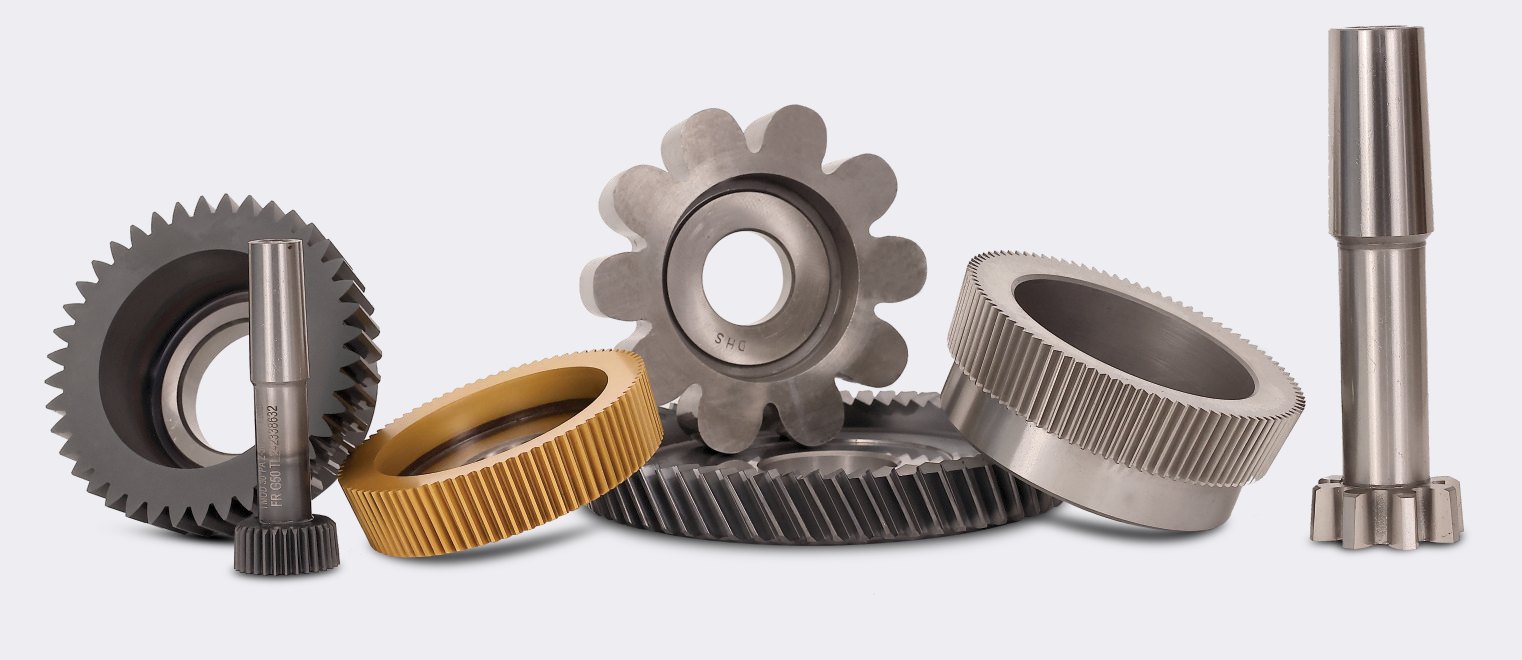
- Hobbing: module and pressure angle, single or multi-start, DIN 3968 class, gashes, and modifications such as protuberance, topping or semi-topping. See gear hobs and our hob selection guide.
- Shaping: disc, hub, shank or bell type chosen by drawing the cutter into the part envelope; tooth count; helical cutter of opposite hand for external and same hand for internal gears; DIN 1829 class. See gear shaper cutters and our shaper cutter selection guide.
- Broaching: push or pull style, profile, length of cut, rise per tooth, and the holder or puller details for your machine. See broaches.
For all three, the tool steel and coating follow the workpiece material, hardness and volume: M2 · M35 · ASP 2030 / 2052 / 2060 · S290 · S390 and TiN · TiCN · TiAlN · AlCrN (Alcrona) · Altensa. The free tool steel and coating selector gives a first recommendation.
Two common mistakes
Shaping an external gear that could be hobbed. It happens when a shop has a shaper and no hobber. It works, but it is slower and the cutter wears faster than a hob would on the same part. If the volume is there, the hobbing capacity usually pays for itself.
Broaching a low-volume spline. A dedicated broach for 25 parts a year is almost always more expensive per part than shaping, even though each broached part takes seconds.
Estimate before you decide
Our free shaping estimator and hobbing estimator give planning cycle times for your part on CNC machines, so you can compare processes with numbers rather than instinct. When you have chosen, send us the print and we will specify the tool.
Richard Potesta is the founder of CTI-USA, the North American sales, engineering and support partner of Capital Tool Industries and distributor for Eifco machines. Questions about an application? Contact CTI-USA or call 330-962-8160.
Need the tool this article describes?
Send us the print. We will specify the cutter or hob, recommend the tool steel and coating, and quote it.