CNC Gear Hobbing Explained: How the Process Works and Where the Hob Makes the Difference
A primer for engineers and buyers who specify hobbed gears
Gear hobbing is the workhorse of production gear cutting. If a gear is external, has open access on both sides and is made in any quantity, it was almost certainly hobbed. This article explains how the process works, why CNC changed it, and the four places where the hob itself, not the machine, decides what comes off the table.
How hobbing generates a tooth
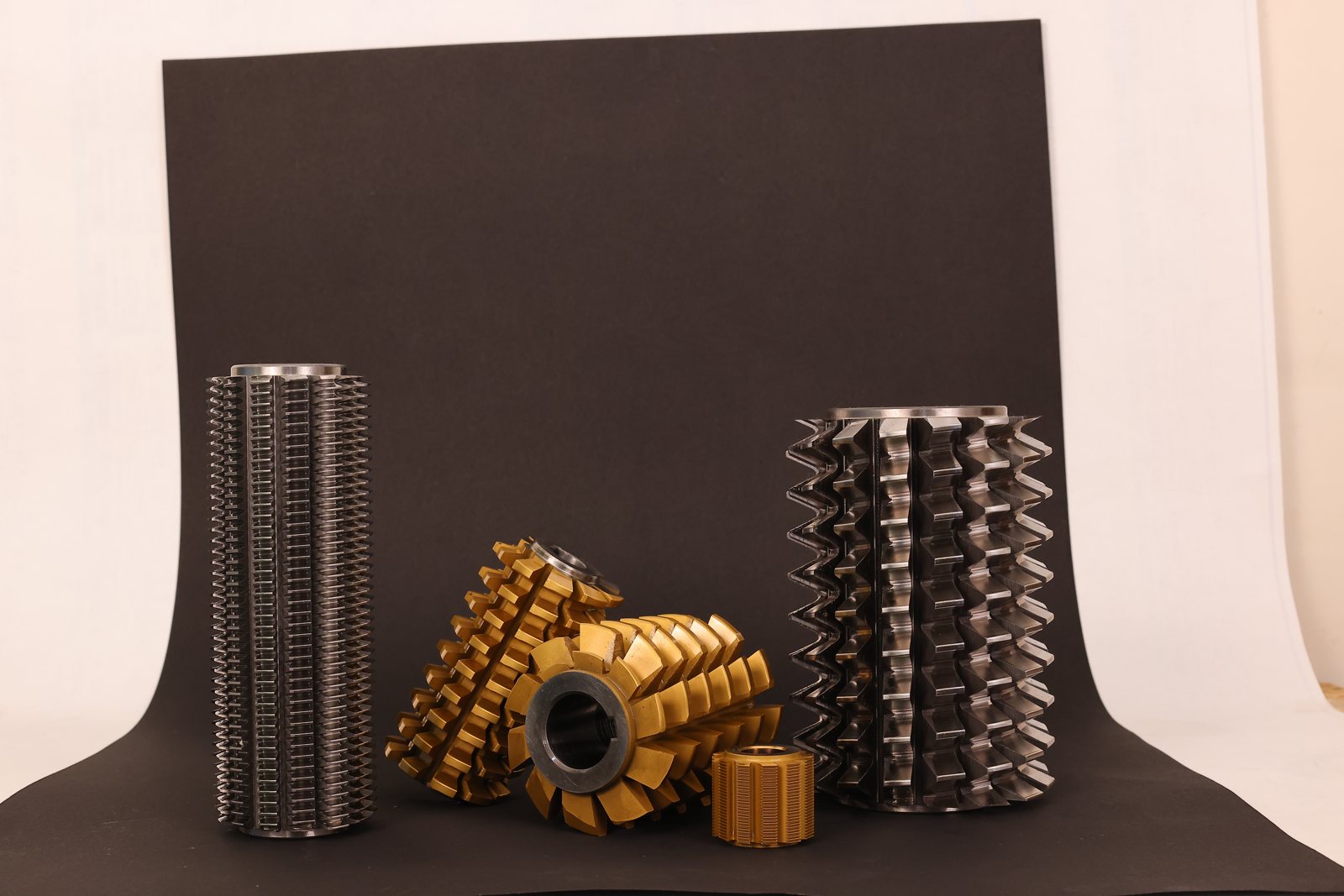
A hob is a cylindrical cutter with helical rows of teeth. In cross-section each row looks like a rack: straight-sided teeth at the gear's pressure angle. As the hob rotates, that rack appears to move sideways, and the gear blank rotates in time with it, as if the blank were a gear meshing with a rack. Each hob tooth takes a small cut, and the envelope of all those cuts is a true involute flank.
Two motions do the work:
- Indexing. The hob and blank are geared together so that one hob revolution advances the blank by one tooth (for a single-start hob). A 2-start hob advances two teeth per revolution, which is why multi-start hobs cut faster.
- Feed. The hob travels axially along the face of the gear so the whole face width is cut. Approach and overrun are added at each end so the hob enters and leaves the blank fully.
Because the tooth form is generated rather than copied, one hob of a given module and pressure angle cuts any number of teeth. That is the economic heart of hobbing: tooling is tied to the module, not to the part.
What CNC changed
On a mechanical hobber the index ratio and differential for helical gears were set with change gears. On a CNC hobber they are electronic, which brings four practical gains:
- Setup time. Module, tooth count, helix angle and shift are entered, not calculated and bolted on.
- Hob shifting. The control moves the hob along its axis between parts so wear is spread over the whole hob length. Properly shifted hobs last several times longer between regrinds.
- Consistency. Every part sees the same feed, speed and shift pattern, so quality does not drift through a shift.
- Dry and high-speed hobbing. Rigid direct-drive machines and modern coatings allow cutting speeds and chip loads that were not possible with flood coolant on older machines.
CTI-USA also distributes Eifco CNC gear hobbing machines in North America. Read what to look for when adding hobbing capacity.
Where the hob decides the outcome
The machine controls motion. The hob controls geometry, finish and cost. Four choices matter most.
1. Accuracy class
Hobs are made to DIN 3968 class AA, A or B. Pitch error, profile error and runout of the hob transfer directly into the gear. Match the class to the gear quality you need: AA for ground-quality and master work, A for most precision production, B for general gearing that is finished after hobbing. Running a class B hob and hoping for a DIN 7 gear is a false economy.
2. Tool steel
M2 remains the general-purpose grade. M35 (cobalt) holds its edge longer in alloy steels. Powder-metallurgy grades such as ASP 2030, ASP 2052, ASP 2060, S290 and S390 have a finer, more uniform carbide structure, sharpen to a cleaner edge and tolerate higher cutting speeds and harder workpieces. For high-volume dry hobbing, PM-HSS is usually the right answer.
3. Coating
A matched PVD coating typically extends hob life 3–8× compared with an uncoated tool. TiN suits general wet hobbing of carbon steels; TiCN suits abrasive materials and cast iron; TiAlN suits alloy steels and dry cutting; AlCrN (Alcrona) gives the best oxidation resistance at high temperature; Altensa is designed for high-productivity hobbing of case-hardening steels. The coating must match the cutting conditions: a dry-cut coating run under flood coolant never reaches the temperature at which it forms its protective oxide layer, so you pay for performance you never use.
4. Geometry
Number of gashes, number of starts and relief angle trade finish against productivity and regrind life. More gashes give a finer generated flank; fewer give bigger chip gullets for roughing. Single-start hobs give the most accurate form; multi-start hobs cut faster at some cost in accuracy. Protuberance, topping, semi-topping and tip relief are specified on the hob and cannot be added at the machine.
Why it matters to the buyer
Purchase price is a poor measure of a hob. The useful number is cost per gear produced: tool price plus total regrind and recoat cost, divided by pieces per edge × (regrinds + 1). A PM-HSS hob with the right coating typically runs two to three times the pieces per edge of an uncoated M2 hob, so even at two to three times the price its cost per gear comes out lower once regrind cost and downtime are counted.
Where CTI-USA fits
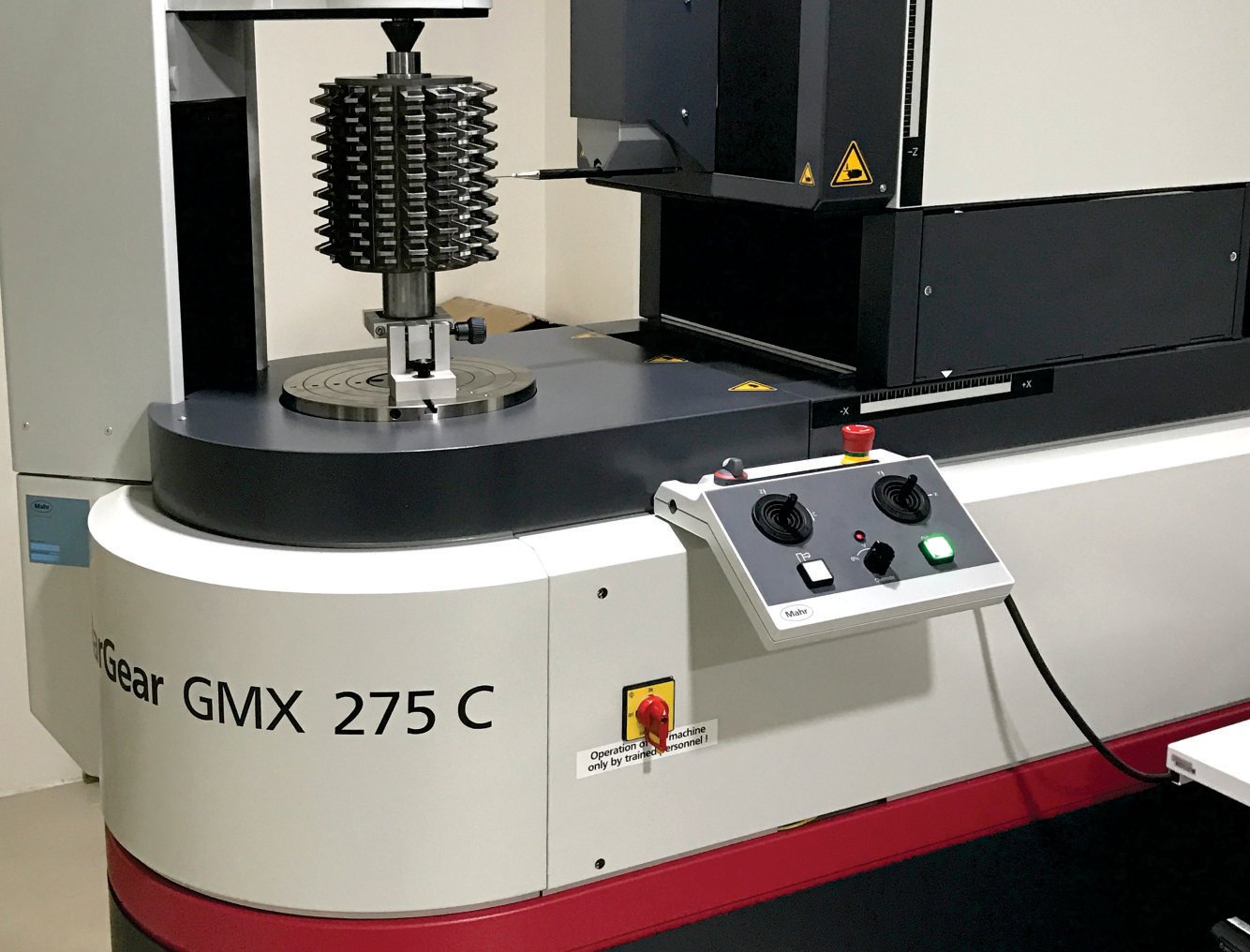
Capital Tool Industries has manufactured gear hobs since 1966. Hobs are available from module 0.1 to 40 (inch pitches 120 to 0.7 DP), single or multi-start, in DIN 3968 class AA, A or B, with every profile modification, in M2 · M35 · ASP 2030 / 2052 / 2060 · S290 · S390 with TiN · TiCN · TiAlN · AlCrN (Alcrona) · Altensa. Each hob is inspected on Klingelnberg equipment and ships with its report. CTI-USA supplies them from Hudson, Ohio with US-based engineering support, resharpening and recoating.
Try it on your part: the free hobbing cycle-time estimator compares single- and multi-start hobs for your gear and the tool steel and coating selector recommends a grade and coating. Or send us the print.
Originally published on LinkedIn in January 2024; revised and expanded October 2026.
Richard Potesta is the founder of CTI-USA, the North American sales, engineering and support partner of Capital Tool Industries and distributor for Eifco machines. Questions about an application? Contact CTI-USA or call 330-962-8160.
Need the tool this article describes?
Send us the print. We will specify the cutter or hob, recommend the tool steel and coating, and quote it.